Tinker without paying for a whole rack.
Small servers for side projects and learning labs: real hardware, pay for the time you use, and easy to delete when you're done.
What people run here
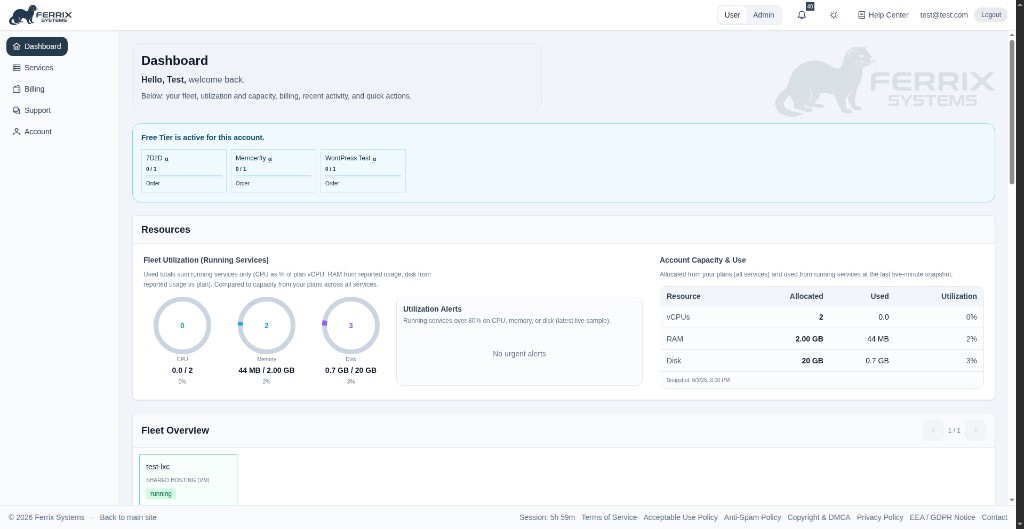
We see a lot of these patterns, and they all work well.
01 · Learning labs
Break stuff on purpose.
Reading a Linux book? Studying for a cert? Trying something new? Spin up a small server, break it however you want, delete it when you're done.
- Tiny servers from cents-per-hour
- Snapshot before risky changes
- Multiple Linux distros to pick from
- Delete it cleanly when you've moved on
02 · Side projects
Host the thing you've been building.
That side project on your laptop? Move it to a real server with a real IP, and stop being scared to close your laptop lid.
- Public IP, real DNS, custom domain
- Run anything that runs on Linux
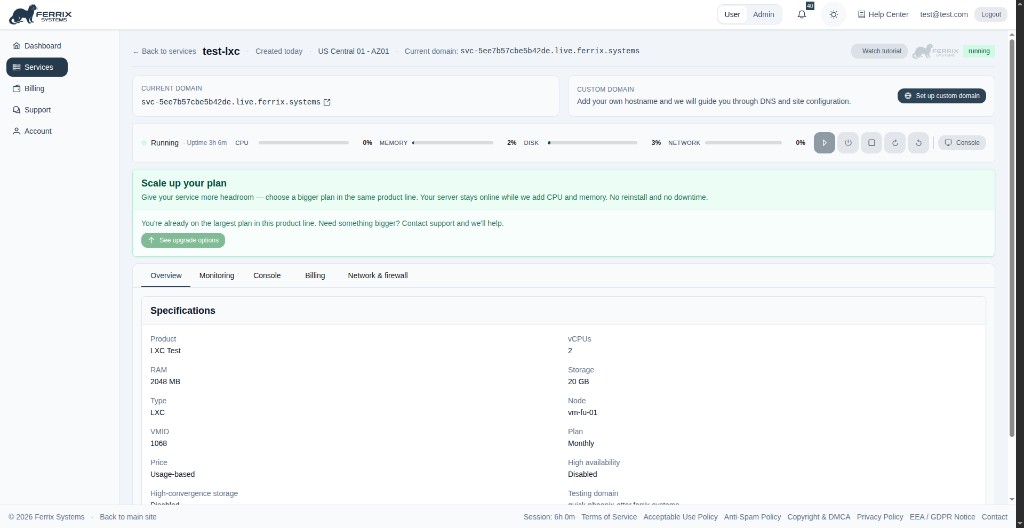
- Stop and start whenever you want
- Delete it when you're done and billing stops
Like what you're reading?
Make an account in a minute. You're most of the way there.
03 · Personal cloud
Run the things big tech sells you for $20/mo.
Self-host your password manager, your file storage, your photos, your media server, your Pi-hole, on a server with root access that costs less than a streaming subscription.
- Root access, so you install whatever you like
- Persistent storage that survives reboots
- Snapshots before you upgrade
- Cheap enough that 'always on' makes sense
04 · Off when you're done
Delete cleanly. Pay only for what you ran.
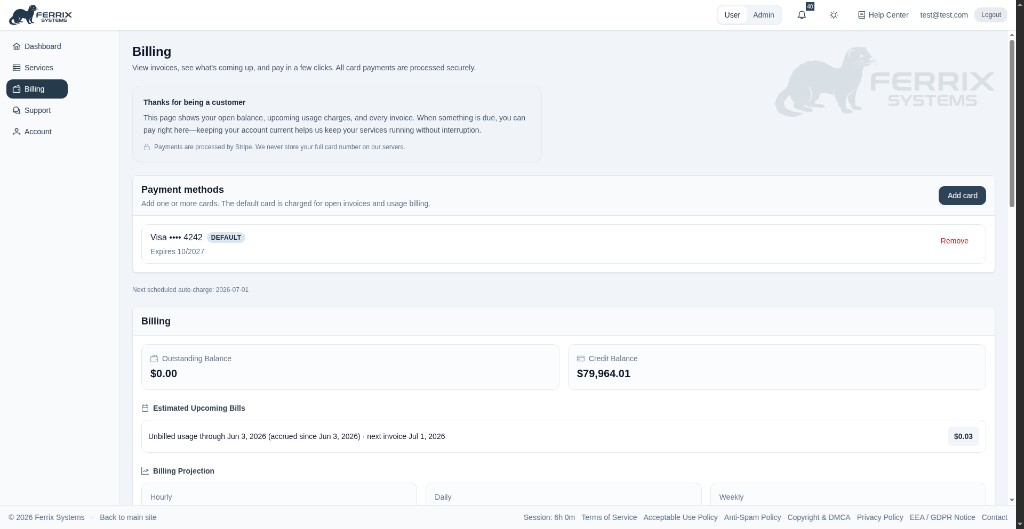
When the project's done, the cert's earned, or you've moved on, delete the service. Hourly metering stops when it's gone, and you get a final invoice for what it ran.
- Bills update live
- No early-termination fee
- Delete in two clicks
- Final invoice is honest, and that's it
Why hobbyists like it here
Three things that make the difference for a side project.
Cheap to start
The smallest size costs less than a coffee for a week, with no minimum spend and nobody calling to upsell you.
Easy to delete
When you're done, you're done. Two clicks, and the meter stops with the service.
Friendly humans
We treat the person learning Linux at midnight the same as a developer running production. Same chat, same answers, same patience.
Build the thing.
Spin up a server for less than a coffee. Delete it tomorrow if you don't like it.